







Better Internet for Kids: Raising a New Generation of Digital Citizens in Armenia
The Armenian-language version of the EUN’s Web We Want resource, produced by STEM Society, marked the 9th edition of Safer Internet Armenia. Launched annually on Safer Internet Day, the program brings together public and private organizations as well as educational institutions with the shared goal of raising awareness and educating children, parents, and educators about Internet risks, privacy, and security.
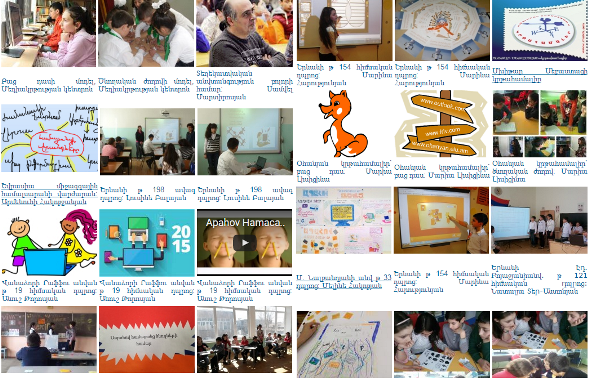 Within the framework of the Safer Internet Armenia program (http://safe.am), schools in Yerevan and across the regions of Armenia host open lessons and meetings with parents each year. These events address issues related to the safe and responsible use of the Internet and digital technologies, while educational materials are widely disseminated. Participants receive practical guidance on how to use the Internet safely, effectively, and for educational purposes. Armenian-language resources are developed and distributed for different age groups.
Training programs for teachers and parents are also organized, focusing on Internet privacy and security, technical solutions, and ways to create a safer online environment for children. Workshops with parents typically explore strategies for preventing unethical or harmful uses of new technologies. In addition, annual Best Open Lesson and Best Meeting with Parents competitions are held to promote key Internet safety messages, showcase school-based educational initiatives, and encourage creativity and media production skills among participants.
“When it comes to ICTs and youth, an Armenian fairy tale, The Brother Axe, comes to mind,” said Anahit Khosrovyan, Principal of Yerevan School No. 20 named after John Kirakosian, during Safer Internet Day celebrations at the school. “Instead of serving its purpose of chopping wood, the Brother Axe injured innocent villagers, since they had never used axes before. It was beaten, burned, and ultimately caused a great fire that destroyed the village granaries. This fairy tale reminds us of the negative effects that new technology can have on human life.”
“With ‘The Brother Axe’ story, we begin our lessons, trainings, and workshops on Internet safety for children, teachers, and parents,” she added. “It helps stimulate discussion around protection and empowerment, dangers and opportunities, harmful uses of technology, as well as creativity, participation, and digital citizenship.”
Safer Internet Armenia also includes an educational component for Science, Technology, Engineering, and Mathematics (STEM) teachers, aimed at engaging them in online projects. A new STEM e-platform is being developed, where teachers will be able to publish educational materials, share lesson plans, and moderate discussions. The platform will also allow schoolchildren and students to access educational resources, watch recorded lessons, and participate in topical discussions moderated by teachers. Educators are trained in e-learning tools to support this initiative. These efforts aim to help people acquire the skills and competencies necessary to benefit from new technologies while mitigating potential risks.
“We often say that ICTs are ‘double-edged,’” noted Anahit Galfayan, an informatics teacher at Yerevan-based Inclusive School No. 78 named after Hayrapetyan, where children with and without disabilities study together. “Along with risks such as isolation, antisocial behavior, and harm, digital technologies can also foster socialization, inclusion, learning, and, in some cases, protection.” Anahit Galfayan is one of more than 20 Armenian teachers participating in the Online Safety MOOC organized by European Schoolnet and INSAFE, which includes modules on cyberbullying, hate speech, communication, and media literacy.
Media literacy education has been among the key priorities of Safer Internet Armenia in recent years. “Not only writing and editing, filming, and video production, but also critical thinking and digital citizenship skills are essential for people in the 21st century,” said Anahit Galfayan. “Together with other inclusive schools in Armenia, we participated in media literacy trainings during which we established our school website (http://school78.safe.am/) and learned how to turn it into a creative environment for students’ media production.”
She also emphasized that children with disabilities particularly benefit from mastering ICTs, noting that media production activities are actively supported and encouraged at the school.
This year, the 9th edition of Safer Internet Armenia has been launched with the support and participation of a wide range of stakeholders. To date, more than 800 schools out of 1,300 nationwide have been reached through open lessons on Internet safety. Schools have received lesson plans and a variety of Armenian-language tools, including European Schoolnet’s eSafety Kit and The Web We Want, as well as the Council of Europe’s Internet Literacy Handbook. Recently, materials from the global STOP.THINK.CONNECT. online safety campaign were also disseminated among educational institutions in Armenia.
Safer Internet Armenia is a public–private partnership supported by UCOM, the National Center of Educational Technologies of the RA Ministry of Education and Science, and the Yerevan City Municipality. Activities are coordinated by the Armenian Safer Internet Committee.
More information about Safer Internet Armenia is available at http://safe.am, along with educational resources can be found at the following links:
eSafety Family Kit Armenian edition
eSafety Family Kit Teachers' Resorces
Council of Europe Internet Literacy Handbook Armenian edition
STOP. THINK. CONNECT. Online Safety Resources
Internet safety video materials
